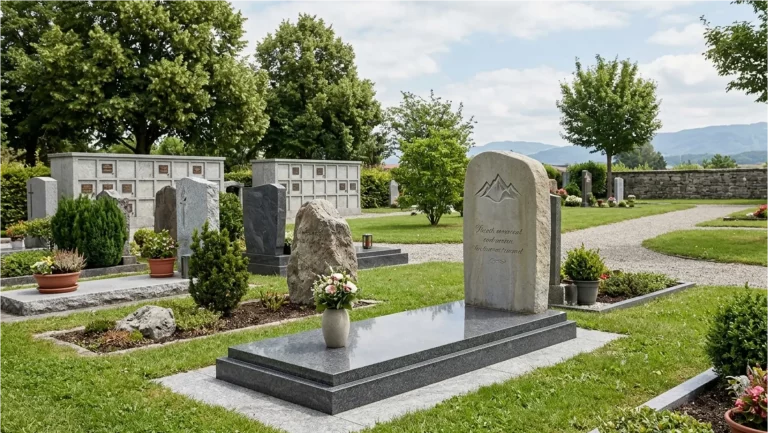
Cremation or traditional burial: advantages, disadvantages, and legal aspects

Facing the loss of a loved one is an intense emotional ordeal, compounded by the weight of making important decisions regarding the funeral. Among the fundamental choices is deciding between cremation and a traditional burial. This often-delicate dilemma involves a mix of personal, cultural, religious, financial, and legal considerations.
In this comprehensive article, we will take an in-depth look at the differences between these two funeral practices. You will discover their advantages, disadvantages, legal implications, as well as practical advice to help you make an informed choice.
Whether you are planning ahead or facing an urgent decision, this guide will provide you with all the necessary keys to understand your options and decide with peace of mind.
Definition: cremation and burial
What is cremation?
Cremation is the process of reducing the deceased’s body to ashes through combustion in a crematorium. The ashes are then kept in an urn, scattered in an authorized location, or placed in the ground (a cremation grave) or a columbarium.
What is burial?
Burial, also known as interment, involves placing the body in a casket and then burying it in a grave, typically within a cemetery.
These two practices stem from different traditions and involve specific procedures.
Cremation: pros and cons
The advantages of cremation
- Generally lower cost: cremation is often less expensive than a traditional burial.
- Flexible ceremonies: offers the opportunity to organize a personalized memorial service.
- Space-saving: no need for a burial plot in certain cases.
- Reduced environmental impact: takes up less space in cemeteries.
- Mobility of ashes: loved ones can keep or scatter the ashes.
The disadvantages of cremation
- Lack of a fixed memorial site if the ashes are scattered.
- Varying cultural or religious acceptance.
- Irreversible process: there is no turning back.
- Strict legal framework regarding the scattering of ashes.
Traditional burial: pros and cons
The advantages of burial
- Permanent place of remembrance: the grave provides a lasting site for reflection and mourning.
- Respect for tradition: often preferred in various religious cultures.
- Strong symbolism: a tangible connection to the deceased.
The disadvantages of burial
- High cost: casket, burial plot, and ongoing maintenance.
- Space constraints in cemeteries.
- Regular upkeep required.
- Greater environmental footprint.
Direct comparison: cremation vs burial
- Cost: cremation is often cheaper
- Place of remembrance: burial is preferred
- Flexibility: cremation is more flexible
- Tradition: burial is more traditional
- Eco-friendliness: cremation holds the advantage
Legal aspects to consider
Cremation regulations
Cremation is subject to strict rules. In Geneva, for example, this includes:
- Mandatory authorization from the town hall (cemetery service)
- Compliance with legal timeframes following the death
- Regulated final disposition of the ashes
The ashes can be:
- Kept in an urn
- Interred in the ground in a so-called cremation grave
- Scattered in a garden of remembrance
Burial regulations
- Burial within the legally required timeframe (often 48 hours to 6 days)
- Municipal authorization
- Purchase or lease of a burial plot
Factors to consider when making the right choice
- Wishes of the deceased
- Available budget
- Religious beliefs
- Family preferences
- Environmental considerations
You can also consult our complete guide on organizing a funeral or our article on funeral costs.
Environmental impact of both options
Cremation
CO2 emissions, but optimizes land use.
Burial
Consumption of natural resources, use of chemical products, and intensive land use.
Practical advice for planning ahead
- Put your funeral wishes in writing
- Take out a prepaid funeral plan
- Inform your loved ones
- Compare quotes from funeral homes
Discover also our guide on prepaid funeral plans.
FAQ
Yes, as long as the funeral services have not yet taken place.
In some countries yes, but it depends entirely on local legislation.
Cremation is generally less expensive.
It depends on the religion. Some accept it, while others advise against it.
The choice between cremation and burial depends on many personal, cultural, and financial factors. There is no one-size-fits-all solution: each family must make a decision that aligns with their values and the wishes of the deceased.
Planning ahead for these choices helps relieve your loved ones of the burden and ensures your wishes are respected. Whichever option you choose, the most important thing is to pay a dignified tribute to the person who has passed.
Take the time to discuss it with your loved ones or consult a professional to plan the funeral with peace of mind.