Funeral Monuments and Headstones: How to Choose the Right One
After the funeral, once the intensity of the first few days has subsided, families are often faced with a question they had not anticipated: choosing a funeral monument. Memorial plaques, headstones, grave markers, columbarium plaques—there are many options available, timelines vary, and decisions must be made at a time when emotional reserves are still fragile. Understanding the possibilities and the factors that guide these choices can make this step feel more manageable and less overwhelming.
A Decision That Endures
Unlike many decisions that must be made in the immediate aftermath of a death, selecting a funeral monument rarely needs to happen right away. In most Swiss municipalities, families are given several months before the installation of a headstone becomes necessary. This period is invaluable. It allows relatives to catch their breath, reflect together, and make a decision that genuinely reflects the life and personality of the deceased—without feeling rushed.
The Different Types of Funeral Monuments
Today’s memorial industry offers a wide range of monuments, from traditional designs to more contemporary creations.
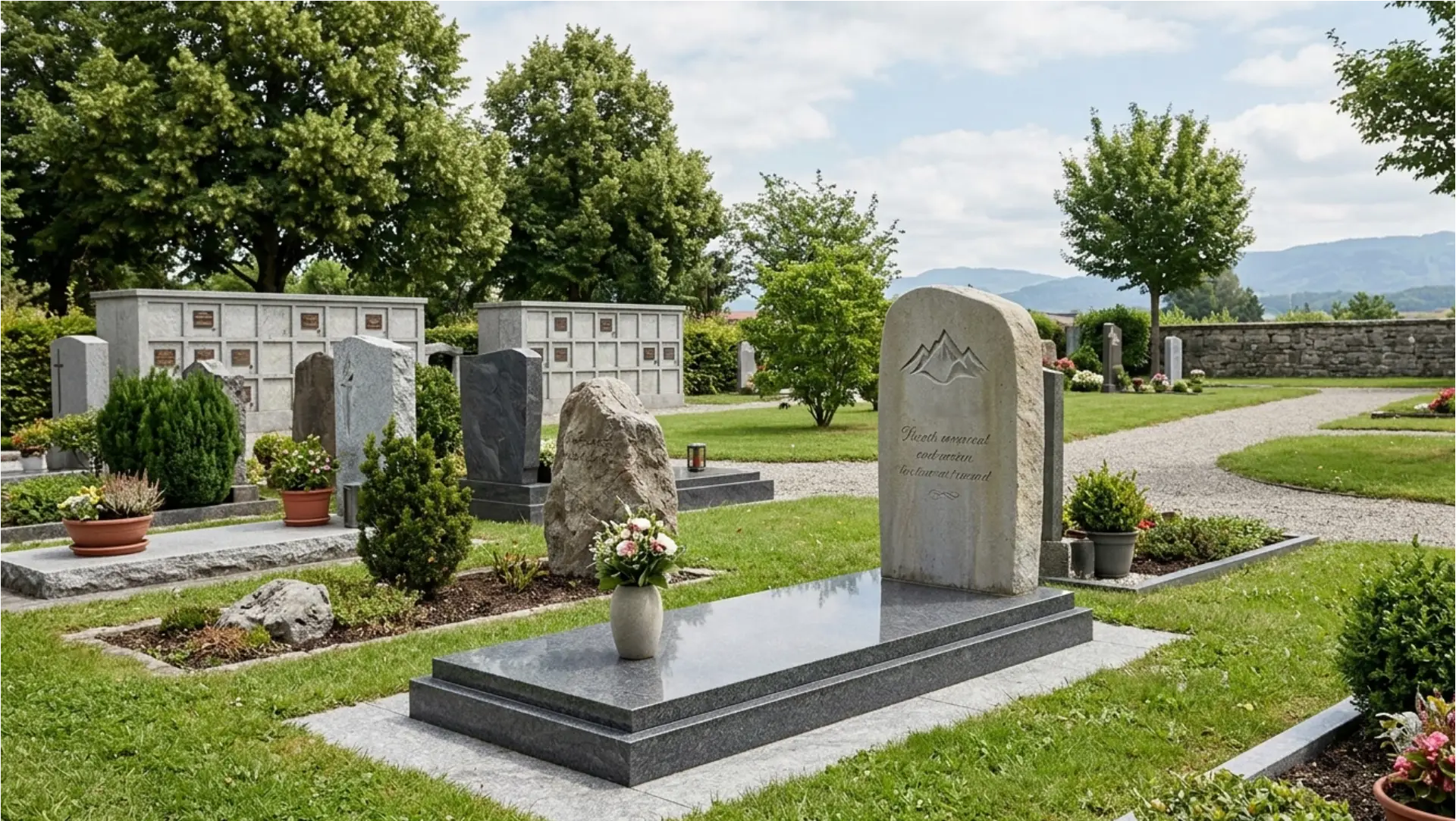
The upright headstone remains the most common form found in Swiss cemeteries. Whether simple or elaborately crafted, it provides a visible surface for engraving a name, dates, and sometimes a meaningful inscription or symbol. It can be made from a variety of materials, including granite, marble, local natural stone, or slate.
Flat grave markers, laid horizontally over the burial plot, are often chosen for their understated elegance. They blend harmoniously into landscaped cemeteries and offer ample opportunities for personalised engravings.
For burials in natural or woodland cemeteries, rough-hewn stones or wooden markers are often preferred. These options complement the surrounding environment and reflect the ecological values of many families.
For cremated remains placed in a columbarium, individual memorial plaques provide a dignified way to mark the location while remaining part of a carefully maintained collective memorial space.
Materials: Balancing Beauty and Durability
Granite remains the benchmark material for funeral monuments. Its resistance to weather, exceptional longevity, and broad range of colours—from light grey and deep black to shades of pink and blue—make it particularly well suited to Switzerland’s climate. It withstands both the harsh winters of Alpine regions and the warm summers around Lake Geneva with remarkable resilience.
Marble, while often considered more refined and visually striking, is more vulnerable to weathering and generally requires more regular maintenance. Local natural stone appeals to families who value craftsmanship and regional heritage, offering colours and textures that blend naturally with the surrounding landscape.
The Role of Municipal Regulations
In Switzerland, cemeteries are administered by local municipalities, each of which establishes its own regulations governing funeral monuments. These rules may specify permitted dimensions, approved materials, and acceptable engraving styles. Regulations can vary significantly from one municipality to another, even within the same canton.
For this reason, it is essential to consult the relevant local authority—or entrust the process to a memorial mason—before placing an order.
Personalisation: Giving Memory a Face
Beyond the choice of material and design, personalisation is what makes a memorial truly unique. Engraving a name and dates is the minimum requirement, but many families choose to go further.
A laser-etched portrait, a symbol connected to the deceased’s passions—a musical note, a professional tool, a mountain landscape—or a short phrase that captures a life story or expresses enduring love can all become meaningful additions.
Far from being mere decorative details, these elements are often what loved ones look for during each visit. They transform a block of stone into a place of remembrance that feels personal, familiar, and deeply connected to the person being honoured.
Working with a Professional
The selection and installation of a funeral monument are typically entrusted to a memorial mason, a specialised craftsman who often works closely with funeral directors. Their role is to guide families through the available options, ensure compliance with local regulations, and deliver a high-quality memorial within the agreed timeframe.
Some funeral homes provide this service directly, offering continuity of care from the organisation of the funeral through to the final installation of the monument.
Choosing a funeral monument is the final visible tribute to a life. It is a decision about what future visitors will see, read, and touch for years to come. As such, it deserves the same care and consideration as every choice that came before it—and perhaps a little more time, so that it can be made with both thoughtfulness and heart.