Bespoke Funerals, or How to Turn a Farewell into the Portrait of a Life
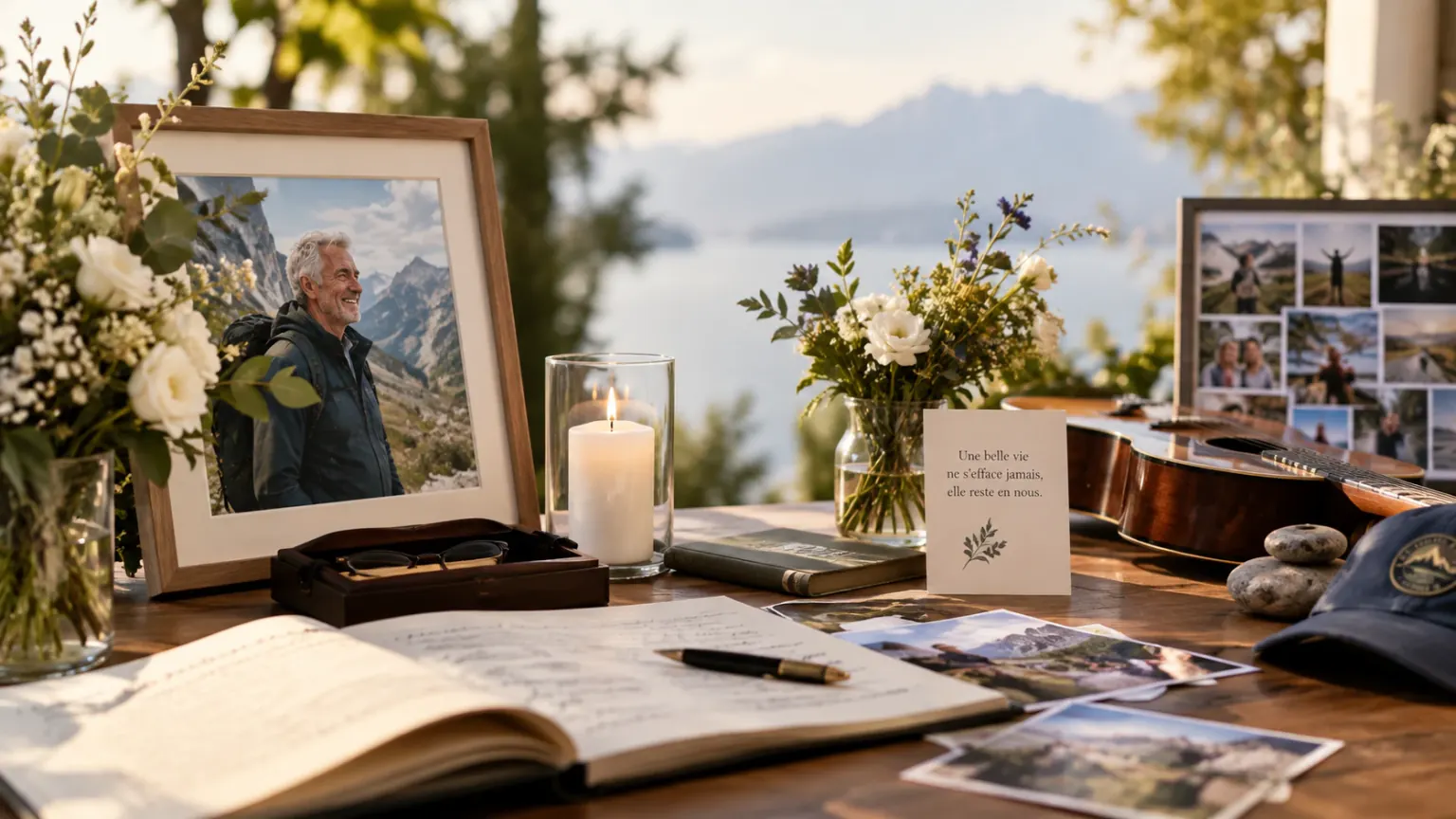
Some funerals change you. Not crush you – change you. You laughed once or twice, you recognized someone in every detail, you left feeling you had truly met the deceased, even if you had known them for thirty years. Ceremonies like these do not fall from the sky. They are built, often with care, sometimes in a hurry, always with love.
Organizing a personalized funeral means refusing to let death erase the individual behind a standard protocol. It means choosing to say: this person, with their habits, their passions, their contradictions – deserves better than an interchangeable hour between the eleven o’clock mass and the family lunch.
Start by Listening, Not by Planning
Before thinking about flowers or music, there is a step many people skip: remembering. Not just the big dates. The little things. The way he made coffee. His obsession with thousand-piece puzzles. The jacket she always wore in autumn. These details are the raw material of a ceremony that truly resembles someone.
Gathering a few loved ones – not necessarily everyone, just those who knew the person differently – and asking them simple questions can bring back surprising memories. Who was he at twenty? What did she often repeat without realizing it? What would he have wanted people never to say? That last question, in particular, is often revealing.
The Place Speaks Before Anyone Else
A neutral funeral parlor is not inevitable. Many families do not know it, but it is often possible to hold all or part of the ceremony in a meaningful place: a garden, a community hall, even a converted barn. For a woman who had spent forty years tending her vegetable garden, holding the wake in that same garden, in October, with the last squashes still in the beds – that is something no one forgets.
When the place cannot be chosen, it can be transformed. Photos arranged at the entrance, personal belongings on a small table, the favorite colors of the deceased in the floral arrangements: so many signs that tell those present they are in the right place.
Speaking: A Difficult Art
The eulogy is perhaps the most dreaded part. We want to be accurate, we want to be dignified, and we sometimes end up being vague – which is the worst thing of all. “He was generous, she loved life”: these phrases move no one, because they could apply to anybody.
What touches people is the specific. A precise anecdote. A memory that belongs only to that relationship. The way he said “right then” to end a conversation. The cake she always brought overbaked to birthdays, and that everyone ate anyway. Moments like these make people laugh and cry at the same time, which is exactly what we are looking for.
It is entirely possible to invite several people to speak: a child, a childhood friend, a colleague. No more than three or four. Each brings a facet, and the portrait becomes complete.
Music, Images, Objects: Languages Without Words
Music takes us where words cannot reach. Not the same music for everyone – an obvious truth that is often forgotten. For some, it will be a requiem; for others, a 1970s pop song that had them dancing in the kitchen. Both are equally legitimate. What matters is that it is their music, not what we assume to be appropriate.
A well-made slideshow can be deeply moving. A few unwritten rules: mix the different periods of life (not only the last few years), include ordinary photos (not just the big occasions), and, if possible, add short captions – a date, a place, a first name. This anchors the images in a tangible reality.
Some families also bring objects: a pair of glasses placed on the coffin, a book open at a favorite page, a collection of bottle caps carefully arranged in a box. These gestures may seem trivial. They are not.
What Loved Ones Can Keep
A personalized funeral does not end at the cemetery gates. Thinking about what those present will take away with them – not in a material sense – is also part of the work. A printed program with a photo and a few handwritten lines. A small card with a quote they loved. Sometimes, just a note slipped into an envelope.
These traces travel through time differently than flowers do.
What Remains When Silence Returns
We cannot recreate a life. But we can, for the length of a ceremony, make that life visible, recognizable, irreplaceable. A personalized funeral is not a luxury for those with time or money. It is a decision: the decision not to let grief erase the person before we have had the chance to truly say goodbye.
And sometimes, in this somewhat rushed, somewhat painful work of remembrance, we discover things we did not know. We understand someone we thought we knew. We make peace with an image. That too is a successful farewell – not only honoring the deceased, but leaving, ourselves, a little less in the dark.